There are many buses we have travelled on, spent our childhood on when our parents took us to school and which we now travel to work on. If we close our eyes and imagine a bus, no doubt the one that comes to mind is the typical MAN or Mercedes-Benz that we see passing our house every day. But what about the ones that formed part of our daily lives decades ago? The pictures below show models such as the iconic Tilling-Stevens and the CGA's imperial models; unfortunately, there are no pictures available of other models, such as the AEC. Join us on this exciting journey through time.
Barcelona’s bus network would never have existed without the workers behind it. Buses have changed over time and so has the way people work. The work carried out by all these people defines us and takes us where we are today: We are who we are because of who we were, and because of who we are, we will become what we will become.
The bus network’s fabric is the result of a long historical process. Often conditioned by the imperatives of the times, such as the International Exposition, the Civil War, the post-war period and the growth of suburbs, the CGA, TB and TMB have tried to meet the needs of the public and offer the best possible service at all times. Implemented in 2012, the New Bus Network would rationalise and organise this network.
Technological innovation is essential, both for improving the service and for the very survival of the entity. The inclusion of state-of-the-art technology has always been one of the CGA’s priority commitments, since the creation of the first line in 1922, a trend that has continued with TB and TMB.
A general awareness began to take root, from the end of the 1970s on, that mobility is a universal right. Buses, as a form of public transport, have evolved to become a fully inclusive means of transport, adapting the network to the special needs of citizens.
TMB is much more than public transport. The bus network is only a small part of what it represents. TMB means citizens, solidarity, heritage, culture and a commitment to people and the environment. TMB is committed to mobility with values, which contributes to sustainable and equitable development with society, which is why it has been promoting several projects that are ensuring this commitment to the people and in line with the sustainable development goals set out in the 2030 Agenda. This is what get us moving.
The Barcelona bus network is more than a utilitarian network providing transport services. Buses play a part in the way we understand and live our lives in the city and are integrated into the collective imagination as a symbolic heritage. That is why they have been and remain an open space for culture, whether for promoting activities or taking part in the city’s events.
Image gallery
Announcements of cultural events on buses
The extensive bus network and continuous movement of vehicles constitute a magnificent platform for promoting…
Photography
The euphoria of Barcelonanism
Football fans will remember the great football legacy of the Guardiola era for the coming…
Videos
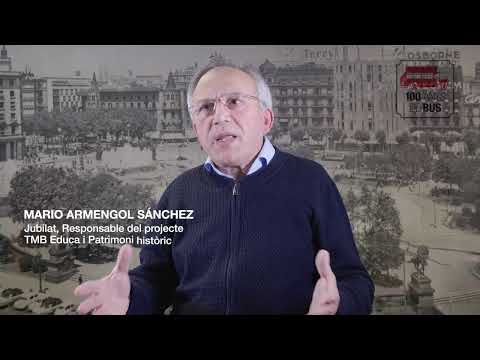
Restoring old vehicles
Restoring vehicles is an important part of the TMB Foundation’s commitment to preserving the history…
Videos
The Classic Bus Rally, a festival event
Historical buses are the central players in the celebration of festive events such as the…
Videos
Solidarity in the face of Covid-19
For all its severity, the Covid-19 pandemic failed to weaken the TMB workers’ vocation for…
Image gallery
El Grec, on board
In June 2012, Pegaso nº. 3036, with the headline “Enlloc” [Nowhere] became the setting for…
Photography
Reflection in culture
Barcelona buses are reflected everyday in cultural productions. Books and films leave an indirect record…
Image gallery
The Bus-Video
A bus was used as a laboratory in 1985 for what was considered advanced culture…
Image gallery
La Mercè Treasure Hunt
TMB plays an active part in Barcelona’s life and culture. Travelling on public transport was…
Image gallery
Zoobus
The legendary ACLO 410 bus, which came into service in 1949, was part of the…
Photography
Social responsibility
In line with the corporation’s social responsibility policy, many drivers perform voluntary services outside their…
Videos
What gets us moving
Image gallery
Bus donation
Since the beginning of the 1970s, TB has incorporated a solidarity and reuse policy for…
Image gallery
Transport, education and citizenship
The TMB educational project aims to convey the value of sustainable, safe and fair mobility…
Image gallery
Educational programmes
TMB has played an active part in educational programmes such as the “Let’s paint a…
Image gallery
Informative and cultural publications
TB regularly published newsletters from 1967 to 1980 with the aim of promoting a cohesive…
Videos
TMB. More than buses
TMB has many departments that deal with a wide range of issues. There is a…
Image gallery
Accessible tools
The TMB bus network is fully inclusive. The latest technologies have been key here to…
Image gallery
On-demand buses
Technological progress is one of the main tools for improving accessibility. The elMeuBus service came…
Image gallery
Platforms at bus stops
At a time when the bus fleet had embarked on a long process of transition…
Image gallery
Lift platform
A Mercedes Benz 508D model, from 1984, one of the first vehicles adapted for people…
Image gallery
The pioneer
The Pegaso-Sava 5720 Microbus, which came into service on an experimental basis in 1977, was…
Videos
An inclusive network
The network is everyone’s and for everyone. Everyone must be able to get on and…
Image gallery
User-information system, from paper to screen
The User-Information System (SIU) was implemented in 2006. The SIU provides passengers with alerts and…
Photography
The first computers
The world of computing signalled the arrival of the fourth industrial revolution. TB has been…
Photography
Solar technology
TMB is committed not only to using renewable energies in its bus services but also…
Image gallery
The engine revolution
The International Exposition presented an excellent opportunity to project an image of modernity to the…
Videos
An innovative network
The commitment to new technologies is strong for several reasons, apart from being a great…
Image gallery
Ticket-dispensing and validating machines
In 1973, a year after the post of bus conductor had been phased out, coin-payment…
Videos
Development of public transport in Barcelona
Modern public transport in Barcelona first began in 1872, with the tram. The bus network…
Videos
Special Olympic Services
The bus network has always tried to offer a service adapted to the demands of…
Image gallery
Promoting public transport
Promoting the use of public transport is promoting the culture of sustainability. Public transport is…
Image gallery
Bus Turístic returns
Line 100 “Discover Barcelona”, the first Bus Turístic line, officially opened in 1987. The tourist…
Photography
Getting around everywhere
Outlying-neighbourhood connections had been strongly demanded by local residents. One example was the Polvorí district,…
Photography
Reserved lanes
Bus lanes became necessary in the face of the steady increase in traffic. The first…
Image gallery
The 1980s, a period of expansion
The 1980s were noted for the bus network’s modernisation, especially with the renovation of the…
Image gallery
Stops
Stops are another element that has been gradually evolving over time. Today there are more…
Videos
Network’s adaptation to urban development
The network has been expanding throughout this century, attempting to offer a service in line…
Photography
Gender
Women, whose jobs were usually confined to the office, have been progressively gaining access to…
Image gallery
Bus conductors
The unique figure of the bus conductor, which some people will still remember, came to…
Image gallery
Information offices
For many years, information on bus routes and stops was only available in offices, where…
Image gallery
The mechanics
Workshop staff were able to meet the level of technological innovation required by the CGA…
Image gallery
Lutxana Central Administration
The Lutxana depot has been the operational, administrative and storage centre of the CGA and…
Videos
A humanised journey
Drivers encounter many unusual situations every day. The relationship with regular or occasional users is…
Image gallery
Uniforms
Driver uniforms represented the service’s seal of quality, of completely suitable and qualified people. The…
Image gallery
Training drivers
The profession of bus driver came about with the establishment of the bus network in…
Videos
Diversified professions
Constant technological advances are transforming and diversifying professions in TMB. Many workers have a family…
Photography
Mercedes-Benz 412 D
This was the first minibus. It came into service in 1998 and was finally taken…
Image gallery
Pegaso nº. 7092
Bus nº. 7092 is a model 6038 Pegaso, which was part of the fleet from…
Image gallery
Pegaso 6035-A
Pegaso 6035-A buses were the surface public-transport vehicles par excellence in the 1970s and 1980s,…
Image gallery
Chausson Urbas 59
Restored Chausson Urbas bus model, nº. 59, manufactured in France. It was part of Urbas,…
Image gallery
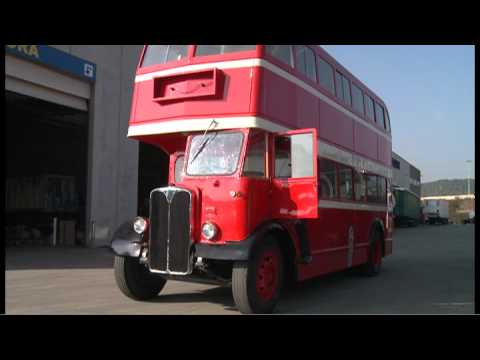
ACLO 410
The ACLO 410, registered in 1948, is a typical London bus; the 400 series was…
Image gallery
Dodge Brothers 240 (CGA 265)
North American bus from the 1930s, in service for 40 years, from 1940 to 1980.…
Image gallery
Laffly
Laffly buses, imported from France, were a unique CGA series, specially acquired for use during…
Image gallery
Imperial 200, built by the CGA
The 200 series with closed-roof imperial, made up of 36 vehicles, was completely built in…
Image gallery
The “burres”
Single-decker Tilling-Stevens buses arrived here by sea shortly after the official opening of the first…
Image gallery
Tilling-Stevens
Tilling-Stevens models, imported from England by the CGA, were the network’s first buses. They operated…
Videos
Restored buses
The TMB Foundation holds a cultural heritage made up of historical TMB vehicles that have…
Videos
From the carriage to the hydrogen bus
Image gallery
Seabed cleaning measures
TMB is at the forefront of the fight against climate change in the world of…
Image gallery
Historical vehicles
Heritage conservation is a commitment of TMB promoted by its Foundation. With participation in city…
Photography
Innovation projects
Technological innovation is one of TMB’s priorities, both for the environment and for safety; incorporating…
Videos
A benchmark network
The network has always been able to adapt and integrate into the dynamics of the…
Photography
New XPRESBus X1 line
On 20 September 2021 a new semi-direct line was launched: the XPRESBus X1, which would…
Image gallery
Sustainable models
In 2022 only 30% of the fleet is pure diesel. The energy transition has been…
Photography
Low and accessible floors
Currently, all buses in service are low-floor buses and fully accessible to everyone, whether they…
Videos
A new network undergoing adaptation
The bus network has been adapting to changes in the city for 100 years, from…
Image gallery
Hybrid models
After decades without trolleybuses, electric energy has returned to buses: this time without the need…
Photography
User Information System (SIU)
In 2006, the User Information System (SIU) and user information screens located at bus stops…
Image gallery
TMB depots
The Horta depot, opened in 2003, is the most modern of the four TMB depots,…
TMB became aware of the need to find alternatives to diesel, committing to a cleaner…
Image gallery
The “Bus del barri” [neighbourhood bus]
In 1998 the ‘Bus del barri’ was launched with its first route covered by the…
Image gallery
Towards accessibility
The bus was modernised and made accessible. The Pegaso started to be replaced by the…
Image gallery
The Olympics
TMB became an Official Sponsor of the Games, re-enforcing and creating new lines to meet…
Photography
Poster publicising traffic congestion
Advertising poster for Transportes de Barcelona (TB) in 1974 on traffic congestion and the need…
Photography
Comfort on the bus
In the early 1980s, the concept of comfort became a goal of the bus service.…
Image gallery
Service transfer cards
Bus pre-payment cards started operating in 1978. In 1981, the T-1 was created, enabling passengers…
Photography
Hijacking of a Line 47 bus, 1978.
In 1978 militant communist TB employee and Nou Barris resident, Manuel Vital, hijacked a line…
Photography
Line 10 bus towards Carmel
1963 saw the opening of Line 10, a permanent service (24h), that covered a route…
Image gallery
Advertising to encourage the use of bus services
In 1965, with the motorcar age in full swing, public transport was advertised as an…
Photography
The bus conductor
A figure that many will remember is the conductor on board the bus, in their…
Photography
Official opening of bus route
Inauguration of Line B with the French manufactured Chausson bus in 1957. Later, it would…
Photography
Municipalisation project
On 29 October 1951, the project to municipalise urban transport in Barcelona was approved, with…
Image gallery
The ACLO model
At the end of the 1940s, Imperial ACLO Mark III double-decker models were imported from…
Image gallery
Trolleybus from the FC
The lack of fuel during the early post-war years meant many buses had to be…
Photography
Stability tests
Stability tests at the Lutxana depot in 1933. These tests began with the refurbishment of…
Photography
State in which the SC bus was left after it was set on fire on the Pont del Besòs
Strikes and sabotage were the usual protest mechanisms used by trade unionists who demanded better…
Photography
State in which a C line bus was left after being sabotaged in Sant Andreu
Strikes and sabotage were the usual protest mechanisms used by trade unionists who demanded better…
Photography
Bus requisitioned by the government authority
Bus requisitioned by the government authority. Bus requisitioned by the government authority. During the "black…
Image gallery
The first tourist buses
The Municipal Tourism Board and the CGA agreed to establish two tourist bus routes during…
Image gallery
The International Exposition of 1929
During the celebration of the Exhibition, the CGA launched various lines with Imperial buses manufactured…
Image gallery
The Lutxana workshop
Photos of the assembly chain at the Lutxana depot in Poblenou during the 1920s. This…
Videos
The Laffly
A unique series of the CGA fleet were the single-decker Laffly buses of the 251-260…
Image gallery
CGA tickets
The CGA began operating in Barcelona in 1922, with a concession for four urban lines,…
Photography
Coexistence of buses and trams
The tram was still the most popular means of urban transport, although the CGA planned…
Photography
Tilling & Stevens
The first buses in the first network were from the English firm Tilling & Stevens…
Document
The advantages of buses
According to this article from the magazine D’Ací i d’Allà, Barcelona’s new bus service offered…
Image gallery
Tickets from La Catalana
The La Catalana bus was cheaper than the tram, 10 peseta cents compared to 15…
Photography
Blessing of buses
Crowd gathered to witness the ceremonial blessing of various buses on St. Christopher’s Day.
Document
La Catalana: a new bus service
The bus service came into operation on a public holiday, with an excursion to Collserola…
Photography
The trams
Trams travelling through Plaça Universitat at the beginning of the 1920s.
Port Aventura World, the most famous leisure complex in Catalonia, 2021. Author unknown, TMB Archive.
Promotion of the Fòrum’s Play Now, a leisure and sports space, 2021. Author unknown, TMB Archive.
Publicity for Bye bye, monster, from the Catalan theatre company Dagoll Dagom, 2021. Author unknown, TMB Archive.
Announcements of cultural events on buses
The extensive bus network and continuous movement of vehicles constitute a magnificent platform for promoting cultural events. Culture travels by bus throughout the city, with announcements of plays, festivals and concerts.
The euphoria of Barcelonanism
Football fans will remember the great football legacy of the Guardiola era for the coming decades, when title-celebration processions were on board a bus decked out for the occasion.
Bus from TMB's Barcelona Bus Turístic fleet, used as an exception for the celebration of the 25th FC Barcelona Copa del Rey, 2009. Author unknown, TMB Archives
Restoring old vehicles
Restoring vehicles is an important part of the TMB Foundation’s commitment to preserving the history and culture of public transport.
TMB Foundation Archives.
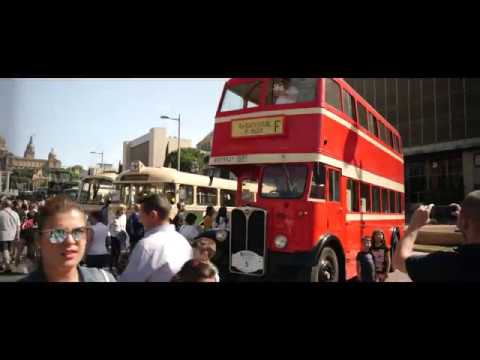
The Classic Bus Rally, a festival event
Historical buses are the central players in the celebration of festive events such as the Classic Bus Rally, although they also play a role in other events such as big annual festivals and processions. Parents and grandparents can travel back in time and show their young ones the buses that had once been part of their everyday lives.
Exhibition and 10th Barcelona International Classic Bus Rally - Caldes de Montbui, 2019. TMB Foundation Archives.
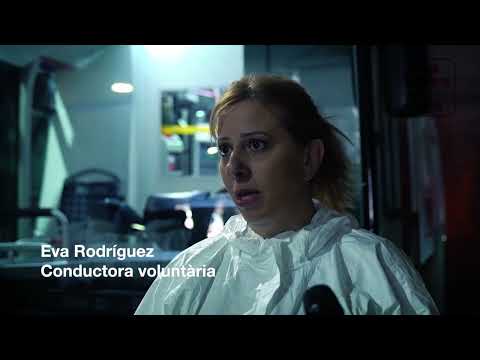
Solidarity in the face of Covid-19
For all its severity, the Covid-19 pandemic failed to weaken the TMB workers’ vocation for service. As many as two hundred TMB drivers offered themselves as volunteers to the TMB Foundation to transport patients who had been medically discharged but had to remain in isolation.
TMB during the Covid-19 pandemic, 2020. TMB Archives
El Grec, on board
In June 2012, Pegaso nº. 3036, with the headline “Enlloc” [Nowhere] became the setting for an unusual play in motion, which was part of the Barcelona Grec Festival’s activities. L’anima del bus told the stories that lurked behind a pile of old shoes.
The bus, theatre setting, 2012. Author unknown, TMB Archive.
Reflection in culture
Barcelona buses are reflected everyday in cultural productions. Books and films leave an indirect record of the city’s bus service, as a further feature making up the urban reality of everyday life.
Scene from Las crueles. Vicente Aranda can be seen putting his hand on his head, in the Rambla del Estudis, in Barcelona. The Academy of Sciences and Arts and a bus can be seen in the background, 1969. Colita, Filmoteca de Catalunya.
The Bus-Video
A bus was used as a laboratory in 1985 for what was considered advanced culture at the time. The Pegaso 1924, equipped with a magnetoscope and a monitor device, took part in the third edition of the Exhibition of Videos Made in Barcelona around Art, Music and Reality.
The Bus-Video experiment, June 1985. Author unknown, TMB Archive Foundation.
Posters of the La Mercè Treasure Hunt, 2000. Author unknown, TMB Archive Foundation.
Treasure Hunt Tickets, 1996-2004. TMB Foundation Archives.
Hora Punta, nº. 50-51, pp. 19-20. TMB Foundation Archives
Hora Punta, nº. 50-51, pp. 19-20. TMB Foundation Archives
La Mercè Treasure Hunt
TMB plays an active part in Barcelona’s life and culture. Travelling on public transport was an essential requirement for participants on the TMB Treasure Hunt. People also took part dressed up in an original costume, and getting through the fun tests awaiting them at several points in the city.
Zoobus
The legendary ACLO 410 bus, which came into service in 1949, was part of the Barcelona landscape during several eras. Known as the Zoobus, it was decked out in colours between 1981 and 1989 to promote visits to the Zoo and covered the route between Plaça de Catalunya and the Zoo.
The Zoobus line with ACLO 410 buses, 1980s, TMB Foundation Archives
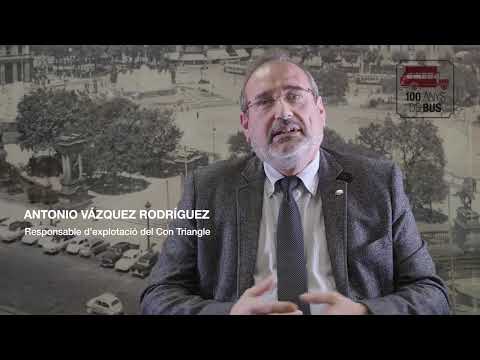
Social responsibility
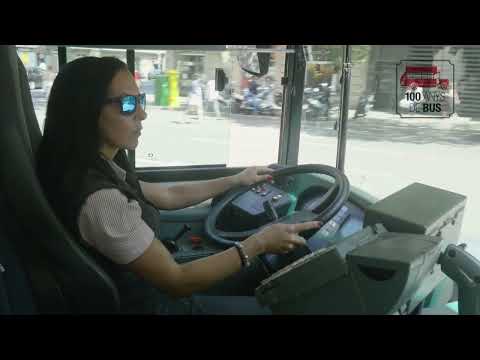
In line with the corporation’s social responsibility policy, many drivers perform voluntary services outside their work day. They travel to collect people with special needs, who are given detailed information on bus spaces to promote their autonomy.
The solidarity service. Author unknown, TMB Archive.
What gets us moving
TMB is what gets us moving, 2021,, TMB
School service in a town in Guinea Bissau, 2005. Author unknown, TMB Archive Foundation.
Bus waiting to go into service in Havana, 2009. Josep - Ramon Tauste Òdena, TMB Archive Foundation.
Bus donation
Since the beginning of the 1970s, TB has incorporated a solidarity and reuse policy for buses taken out of service. Instead of ending up in the scrapyard, they were offered as a donation to ECOM associations providing care to people with physical disabilities and to countries such as Cuba and Guinea-Bissau for a merely symbolic price.
Transport, education and citizenship
The TMB educational project aims to convey the value of sustainable, safe and fair mobility to the educational community in general. With projects such as “Estrena’m”, work was carried out with students on the issues of sustainable mobility and diversity to foster a citizen culture of public transport, through messages that were given out from the new bus fleet.
“Estrena’m” educational activity, March 2020.
Educational programmes
TMB has played an active part in educational programmes such as the “Let’s paint a bus” competition. Barcelona's designation as Olympic host city in 1986 led to an extraordinary increase in participants, who often painted buses with the slogan “Barcelona 92”.
“Let’s paint a bus” school activity (1984-1987). TMB Foundation Archives
Boletín Informativo: Tranvías de Barcelona, 1975. TMB Foundation Archives
Hora Punta, nº. 106, October 2010. TMB Foundation Archives
TMB news (https://noticies.tmb.cat), 2022.
Informative and cultural publications
TB regularly published newsletters from 1967 to 1980 with the aim of promoting a cohesive company culture. It reappeared from 1989 on, under the name of Hora Punta and was integrated into TMB notícies in 2012, which aims to showcase the latest developments and experiences of metropolitan public transport.
TMB. More than buses
TMB has many departments that deal with a wide range of issues. There is a entire project for Barcelona and the metropolitan area behind the bus and metro system: a solidarity project with educational, citizen and cultural aspects involving great social responsibility and commitment.
Accessible tools
The TMB bus network is fully inclusive. The latest technologies have been key here to achieving this milestone. Examples include the development of tools for the blind and new devices, designed under universal-accessibility criteria.
Technological progress is one of the main tools for improving accessibility. The elMeuBus service came about thanks to the possibilities offered by digital hyper-connectivity. This is a service that is reserved online and which operates at the request of users, adapting to their needs.
Bus stop and elMeuBus in service, 2019. Author unknown, TMB Archive.
Platforms at bus stops
At a time when the bus fleet had embarked on a long process of transition to accessibility, where there were still many high platform buses, a commitment was made to building platforms at bus stops to make the service more accessible.
Platforms at bus stops, 1985. Author unknown, TMB Archive Foundation.
Lift platform
A Mercedes Benz 508D model, from 1984, one of the first vehicles adapted for people with reduced mobility. It was a low platform, with a lift platform at the back and a reserved area behind it.
Mercedes Benz 508D. Patronato Municipal de Minusválidos, 1984. Author unknown, TMB Archive Foundation.
The pioneer
The Pegaso-Sava 5720 Microbus, which came into service on an experimental basis in 1977, was a pioneer in offering a service adapted to the needs of people with reduced mobility.
The network is everyone’s and for everyone. Everyone must be able to get on and off the bus, change service, know where they are and feel satisfied with the experience. Which is why the network has been incorporating features such as platforms, adapted information systems and special services.
On-board transport information had not yet reached the digital age, 1990. Author unknown, TMB Archive Foundation.
The digital revolution climbs on board buses, 2011. Author unknown, TMB Archive.
User-information system, from paper to screen
The User-Information System (SIU) was implemented in 2006. The SIU provides passengers with alerts and information on bus stops and possible links, using acoustic and visual signals. This system has represented a major advance in comfort and usability.
The first computers
The world of computing signalled the arrival of the fourth industrial revolution. TB has been committed since the 1960s to incorporating these next-generation technologies into its service. Thanks to this, its bus service information and operations have been completely computerised.
C.O.M, computer room, 1967. Author unknown. TMB Foundation Archives.
Solar technology
TMB is committed not only to using renewable energies in its bus services but also to the efficient and sustainable running of its operational centres.
Photovoltaic power plant in the Zona Franca depot, 2008. Author unknown, TMB Archive.
Diesel engine exhibited at the Universal Exposition, 1929. Author unknown, TMB Archive Foundation.
Engine of a hybrid from 2009, TMB Archive.
The engine revolution
The International Exposition presented an excellent opportunity to project an image of modernity to the world. Diesel engines, the height of modernity in 1929, have given way to environmentally sustainable engines. Today modernity is represented by electric and hydrogen engines.
An innovative network
The commitment to new technologies is strong for several reasons, apart from being a great resource for workers. Improved user comfort, vehicle efficiency, operational management of the network and public safety are consequences of this.
First ticket-payment machines, 1970s. Author unknown, TMB Archive Foundation.
Validation machine for magnetic-stripe tickets, 2011. Author unknown, TMB Archive.
Validation machine with contactless technology for T-mobilitat tickets, 2021. Author unknown, TMB Archive.
Ticket-dispensing and validating machines
In 1973, a year after the post of bus conductor had been phased out, coin-payment machines began to be installed. These machines became obsolete with the appearance of multi-journey card-validation machines. The appearance of the new T-mobilitat opened up a new stage.
Development of public transport in Barcelona
Modern public transport in Barcelona first began in 1872, with the tram. The bus network came about fifty years later, followed two years later by the first metro line. Private companies were municipalised in 1957 and managed jointly, from 1979 on, with the creation of TMB.
TMB Foundation Archives
Special Olympic Services
The bus network has always tried to offer a service adapted to the demands of the time. Occasions and extraordinary events such as the 1929 Exposition or the 1992 Olympic Games have seen the network adapt by offering special new routes or increasing the frequency of some lines. Today, these services are brought into operation for events such as concerts.
TMB Foundation Archives
Promoting public transport
Promoting the use of public transport is promoting the culture of sustainability. Public transport is like a city’s circulatory apparatus, because a collapsed city is a city that is ill.
TMB Foundation Archive, TB Gazette.
Bus Turístic returns
Line 100 “Discover Barcelona”, the first Bus Turístic line, officially opened in 1987. The tourist route was back in the city 58 years later. The background to its creation was similar: the first one was created for the 1929 Exposition, and this one, in anticipation of the 1992 Olympic Games.
Line 100 “Discover Barcelona”, 1987. Author unknown, Fundació TMB Archive.
Getting around everywhere
Outlying-neighbourhood connections had been strongly demanded by local residents. One example was the Polvorí district, where the bus line was extended to in 1971, almost twenty years after the creation of this shanty-town neighbourhood.
Announcement of Line 13 to Polvorí in Boletín Informativo: Tranvías de Barcelona, 1971. Fundació TMB Archive.
Reserved lanes
Bus lanes became necessary in the face of the steady increase in traffic. The first ones had already been implemented in May 1966, but there was still a long way to go. Today, with more than 219 kilometres of bus lanes and traffic-light priority, buses have big advantages over cars in the city.
Bus lanes, 1970s. Author unknown, Fundació TMB Archive.
Official opening of Line 74, 1983. Author unknown, Fundació TMB Archive.
The Ronda Express service, 1992. Author unknown, Fundació TMB Archive.
The 1980s, a period of expansion
The 1980s were noted for the bus network’s modernisation, especially with the renovation of the fleet and the creation of new routes. Routes 60 and 74, implemented during this period, are now integrated into the orthogonal-grid network and have been renamed V33 and H6 respectively.
Stops are another element that has been gradually evolving over time. Today there are more than 2006 stops, many of which have solar panels enabling energy self-sufficient operating.
Source: TMB Foundation Archives
Network’s adaptation to urban development
The network has been expanding throughout this century, attempting to offer a service in line with the urban dynamism of Barcelona and the neighbouring municipalities that today form part of the large Barcelona metropolitan area.
Gender
Women, whose jobs were usually confined to the office, have been progressively gaining access to other traditionally masculinised professional profiles, in line with TMB’s overall commitment to equal opportunities and cross-cutting incorporation of gender perspectives into all company actions.
Women working in offices, 1967. Author unknown, TMB Foundation Archive
Bus conductors
The unique figure of the bus conductor, which some people will still remember, came to an end in 1972. Drivers took over the tasks of conductors and automatic fare-charging technology began to be introduced.
Bus conductors on board, 1960s. Author unknown, Fundació TMB Archive.
Public Relations Office at Ronda de Sant Pau. Author unknown, Fundació TMB Archive.
Information offices at Plaça de Catalunya, 1969. Author unknown, Fundació TMB Archive.
TB Information Office, 1969. Boletín Informativo: Tranvías de Barcelona
Information offices
For many years, information on bus routes and stops was only available in offices, where enormous folding maps, too big to fit in pockets, were handed out. Today, comprehensive real-time information can be found on apps and the website.
The mechanics
Workshop staff were able to meet the level of technological innovation required by the CGA from the very start. Today, they remain at the forefront, working on projects for advanced solutions to reach zero emissions.
Mechanics carrying out repairs and conditioning in the Lutxana workshop, 1932. Author unknown, Fundació TMB Archive.
Offices in Lutxana, 1924. Author unknown, Fundació TMB Archive.
Offices in Lutxana, 1924. Author unknown, Fundació TMB Archive.
Offices in Lutxana, 1924. Author unknown, Fundació TMB Archive.
Offices in Lutxana, 1966. Author unknown, Fundació TMB Archive.
Lutxana Central Administration
The Lutxana depot has been the operational, administrative and storage centre of the CGA and TB for many decades. It was acquired by the CGA on 4 October 1923 and came into service a year later. Many people have worked there their entire lives, in its offices and workshops.
The TMB’s four current depots (ZF, Ponent, Triangle and Horta) continue the legacy of the old Borbó and Lutxana depots, closed respectively in 2003 and 2007.
Source: TMB Foundation Archives
A humanised journey
Drivers encounter many unusual situations every day. The relationship with regular or occasional users is at the heart of this vocation, as passenger treatment and care are an additional feature of professionalism in driving.
Driver uniforms represented the service’s seal of quality, of completely suitable and qualified people. The winter uniform was made of smooth corduroy while the summer uniform consisted of light clothing, both with metal buttons that stood out on them.
Training drivers
The profession of bus driver came about with the establishment of the bus network in Barcelona in the 1920s. To receive accreditation, drivers had to undergo exhaustive medical tests on their vision, hearing and reflexes.
Offices and medical centre for carrying out driver proficiency tests at the Lutxana depot, 1920s. Author unknown, Fundació TMB Archive.
Diversified professions
Constant technological advances are transforming and diversifying professions in TMB. Many workers have a family history with the company and feel a complete sense of pride to serve the general public through their work.
Mercedes-Benz 412 D
This was the first minibus. It came into service in 1998 and was finally taken out of service in 2019. This small model was meant to cover the Neighbourhood Bus service, as larger buses encountered numerous difficulties manoeuvring in narrow streets.
Mercedes-Benz 412 D model. Author unknown, TMB Archive.
Pegaso nº. 7092
Bus nº. 7092 is a model 6038 Pegaso, which was part of the fleet from 1983 to 1999. Pegasos were the typical buses from the 1980s to the 1990s, manufactured locally by the company ENASA. They were also known as Barcelona Buses.
Pegaso 6035-A buses were the surface public-transport vehicles par excellence in the 1970s and 1980s, as they offered excellent features and reliability. They were the first articulated models to be used in Barcelona. They were 18 metres long.
Restored Chausson Urbas bus model, nº. 59, manufactured in France. It was part of Urbas, a subsidiary of TB, from 1955 to 1970, and later joined TB, where it remained in service until 1976. It is the only Chausson model to have been conserved among Barcelona’s buses.
The ACLO 410, registered in 1948, is a typical London bus; the 400 series was imported from England. They were red and double decker, but adapted to right-hand driving.
North American bus from the 1930s, in service for 40 years, from 1940 to 1980. It was a lorry acquired by the Francoist side in 1936 and became a passenger vehicle after the Civil War.
Laffly buses, imported from France, were a unique CGA series, specially acquired for use during the International Exposition of 1929. They were allocated to cover tourist routes, because of their good interior finish, comfortable seats and heating.
Laffly buses, in service during the International Exposition, 1929. Author unknown, Fundació TMB Archive.
Closed-roof imperial model bus manufactured by the CGA, line F: Pelai-Horta, 1930. Author unknown, Fundació TMB Archive.
Closed-roof imperial model bus, manufactured by the CGA, at the Lutxana Bus Depot, 1930. Author unknown, Fundació TMB Archive.
Plaça d’Eivissa, line F: Pelai-Horta, 1930. Author unknown, Fundació TMB Archive.
The CGA’s imperial model, covering the route of the SJ line, Plaça de Catalunya - Sant Just Desvern, 1930s. Author unknown, Fundació TMB Archive.
Imperial 200, built by the CGA
The 200 series with closed-roof imperial, made up of 36 vehicles, was completely built in the CGA’s Lutxana depot. They represent a major milestone achieved by the company during the period: building its own buses.
The “burres”
Single-decker Tilling-Stevens buses arrived here by sea shortly after the official opening of the first lines, in 1922. They were popularly known as “burres” [donkeys] and remained in service in Barcelona until the 1940s.
The CGA's ‘burres’, operating the service between Plaça de Catalunya and Avinguda del 14 d’Abril (today Avinguda Diagonal), 1930s. Author unknown, Fundació TMB Archive.
Tilling-Stevens covering a special service between Plaça de Catalunya and Montjuïc during the International Automobile Exposition, 1927. Author unknown, Fundació TMB Archive.
Tilling-Stevens and the problems caused by unpaved streets in poor condition, 1920s. Author unknown, Fundació TMB Archive.
Official opening of the BS line. Badalona, 3 April 1927. Author unknown, Fundació TMB Archive.
Line D Tilling-Stevens bus: Gracia-Barceloneta, 1928. Author unknown, Fundació TMB Archive.
A restored Tilling-Stevens bus, 2022. Miguel Ángel Cuartero, TMB Archive.
Tilling-Stevens
Tilling-Stevens models, imported from England by the CGA, were the network’s first buses. They operated on petrol-electric engines, the forerunners to today’s hybrid engines.
Restored buses
The TMB Foundation holds a cultural heritage made up of historical TMB vehicles that have been restored or which are in the process of being restored. Many people still remember their daily journeys on board buses that are no longer in circulation, such as ACLO, Chausson, Pegaso.
From the carriage to the hydrogen bus
Seabed cleaning measures
TMB is at the forefront of the fight against climate change in the world of transport. This is demonstrated by solidarity initiatives such as participation in the cleaning of the seabed.
Source: TMB Archives
Three Kings Parade 2022
Three Kings Parade 2022
Three Kings Parade 2022
Three Kings Parade 2022
Classic Bus Rally
Historical vehicles
Heritage conservation is a commitment of TMB promoted by its Foundation. With participation in city events such as the Three Kings Parade, the Classic Bus Rally or the celebration of events such as the Barcelona Bus Network centenary, the history of urban public transport is publicised.
Source: TMB Archives
Innovation projects
Technological innovation is one of TMB’s priorities, both for the environment and for safety; incorporating sensors to prevent impacts and the arrival of state-of-the-art vehicles powered by hydrogen are just some examples.
Source: TMB Archives
A benchmark network
The network has always been able to adapt and integrate into the dynamics of the city. The projects of the future aim to ensure the network improves, continues being a benchmark and anticipates needs. The aim is and has been to offer the best service to everyone.
New XPRESBus X1 line
On 20 September 2021 a new semi-direct line was launched: the XPRESBus X1, which would connect the Besòs and Llobregat tram terminals with the heart of l'Eixample. As a complement to the NXB, it would also respond to the needs of the citizens of a modern and growing metropolis like Barcelona.
Sustainable models
In 2022 only 30% of the fleet is pure diesel. The energy transition has been a milestone: with the introduction of natural gas in 2003, of hybrids in 2012, of electric vehicles in 2020 and hydrogen in 2022, the aim is to reach 2030 with 100% zero-emission vehicles.
Source: TMB Archives
Low and accessible floors
Currently, all buses in service are low-floor buses and fully accessible to everyone, whether they are people with disabilities, the elderly, children or other people with special needs.
Source: TMB Archives
A new network undergoing adaptation
The bus network has been adapting to changes in the city for 100 years, from tram lines to the redefinition of vertical, horizontal and diagonal routes of the New Bus Network (NXB). Technological development has always been at the heart of major responses to the challenges and needs of the network.
Hybrid models
After decades without trolleybuses, electric energy has returned to buses: this time without the need for overhead cables. The hybrid models, which were first trialled in 2009, would come into service from 2012 onwards. The first 100% electric buses appear in 2020.
Source 1: TMB Archives. Author: Silvia T. Colmenero
Source 2: TMB Archives. Author: Silvia T. Colmenero
Source 3: TMB Archives
User Information System (SIU)
In 2006, the User Information System (SIU) and user information screens located at bus stops (PIU) were launched, providing visual and audio information to passengers on board the bus.
Source: TMB Archives
TMB depots
The Horta depot, opened in 2003, is the most modern of the four TMB depots, an international benchmark for integration into its environment and sustainability. Each one is adapted and responds to different needs, from neighbourhood buses, putting the latest developments into production, to incident management, innovation and sustainability.
Horta | Ponent | Triangle Ferroviari | Zona Franca
Source: TMB Archives
TMB became aware of the need to find alternatives to diesel, committing to a cleaner city free of polluting emissions. A Pegaso Monotral 6035 was the first bus to operate with butane gas in Spain.
Source: TMB Foundation Archives
The “Bus del barri” [neighbourhood bus]
In 1998 the ‘Bus del barri’ was launched with its first route covered by the 211 line (Vallvidrera-Tibidabo). This service responded to the special needs of certain urban areas that, owing to their terrain and road layout, did not allow for the use of large buses.
Source: TMB Foundation Archives. Author: Cuartero
Towards accessibility
The bus was modernised and made accessible. The Pegaso started to be replaced by the Mercedes-Benz O-402, the prelude to low-floor buses that would arrive years later. They facilitated accessibility, had air conditioning, non-slip floors and electronic service information.
Source: TMB Foundation Author: Cuartero
The Olympics
TMB became an Official Sponsor of the Games, re-enforcing and creating new lines to meet the mobility needs of thousands of spectators and volunteers. The buses displayed a sponsorship poster for the Olympic Games.
Source: TMB Foundation Author: Cuartero
Poster publicising traffic congestion
Advertising poster for Transportes de Barcelona (TB) in 1974 on traffic congestion and the need to establish an exclusive lane. The first lanes had already been implemented in May 1966, but there was still a long way to go.
Source: TMB Foundation Archives. TB newsletter.
Comfort on the bus
In the early 1980s, the concept of comfort became a goal of the bus service. With Pegaso 6038 the driver had an anatomical seat and curved glass windows to avoid reflections, and passengers had soft seats and handrails to get on the bus more easily.
Source: TMB Foundation Author unknown.
Service transfer cards
Bus pre-payment cards started operating in 1978. In 1981, the T-1 was created, enabling passengers to transfer to the metro and the Tramvia Blau. This represented a surface transport revolution, enabling users to travel on various means of transport with a single card.
Source: TMB Foundation Archives
Hijacking of a Line 47 bus, 1978.
In 1978 militant communist TB employee and Nou Barris resident, Manuel Vital, hijacked a line 47 bus with the cooperation of the PSUC and local residents. He then took it to Torre Baró to demand that public transport should reach the neighbourhood.
1963 saw the opening of Line 10, a permanent service (24h), that covered a route from Pl. Gal·la Placídia (Gràcia) to Carmel. During this period, the bus network was extended to cover the entire city, which grew at a frenetic pace.
Source: TMB Foundation Archives. TB newsletter.
Advertising to encourage the use of bus services
In 1965, with the motorcar age in full swing, public transport was advertised as an alternative. In this case, it compares the space occupied by eighty people in their respective cars and the space occupied by the same number of people travelling by bus.
Source: TMB Foundation Archives
The bus conductor
A figure that many will remember is the conductor on board the bus, in their own cab. From 1972 the payment system was remodelled and the driver took on the role of taking fares for single tickets, which led to the disappearance of this unique profession.
Source: TMB Foundation TB newsletter.
Official opening of bus route
Inauguration of Line B with the French manufactured Chausson bus in 1957. Later, it would evolve into the Pegaso Chausson, which, at the time, were seen as very comfortable and modern vehicles, and which gradually replaced the trams.
Source: TMB Foundation Author unknown.
Municipalisation project
On 29 October 1951, the project to municipalise urban transport in Barcelona was approved, with the aim of extending it to the entire municipal area and easing traffic congestion on public roads, which was presented as a problem to be resolved.
Source: Barcelona City Council Open Knowledge Repository. Urban transport municipalisation project: report (30 January 1952), p. 28-29
http://hdl.handle.net/11703/102933
The ACLO model
At the end of the 1940s, Imperial ACLO Mark III double-decker models were imported from the United Kingdom, which would help bring about the recovery of the bus service. The bodies were built by an Aragonese company, placing the driver on the left and passenger access on the right.
Source: TMB Foundation Author unknown.
Trolleybus from the FC
The lack of fuel during the early post-war years meant many buses had to be converted into trolleybuses, which operated with electricity through the overhead catenary. In this way, the trolleybus became a typical transport system throughout the 1940s and early 1950s.
Source: TMB Foundation Author: Brangulí.
1953.
Stability tests
Stability tests at the Lutxana depot in 1933. These tests began with the refurbishment of the double-decker buses, which were fitted with roofs to provide shelter for passengers on rainy days, from 1928 onwards.
Source: TMB Foundation Author unknown
State in which the SC bus was left after it was set on fire on the Pont del Besòs
Strikes and sabotage were the usual protest mechanisms used by trade unionists who demanded better working conditions. The bus service also suffered the consequences and with the start of the war, the progressive expansion of the service came to a halt.
Source: TMB Foundation Author unknown
16 July 1935
State in which a C line bus was left after being sabotaged in Sant Andreu
Strikes and sabotage were the usual protest mechanisms used by trade unionists who demanded better working conditions. The bus service also suffered the consequences and with the start of the war, the progressive expansion of the service came to a halt.
Source: TMB Foundation Author unknown
13 April 1934
Bus requisitioned by the government authority
Bus requisitioned by the government authority. Bus requisitioned by the government authority. During the "black biennium", there were numerous strikes and clashes between the Radical-Cedista authorities and trade unions and revolutionary parties. The transport sector was particularly affected by these class conflicts.
Source: TMB Foundation Archives. Author unknown.
Via Laietana, May 1934.
The first tourist buses
TheMunicipal Tourism Board and the CGA agreed to establish two tourist bus routes during the 1929 International Exposition: a ‘deluxe’ service and a cheaper one. This pioneering service returned in 1987 to become an emblematic service in the city.
Source: TMB Foundation Archives. Author unknown.
The International Exposition of 1929
During the celebration of the Exhibition, the CGA launched various lines with Imperial buses manufactured by the company itself, connecting Montjuïc with Plaça Espanya, as well as other routes for visiting the most iconic landmarks in Barcelona. The fare ranged between 20 cents and 1 peseta.
Source: TMB Foundation Author unknown
The Lutxana workshop
Photos of the assembly chain at the Lutxana depot in Poblenou during the 1920s. This was the main workshop for repairing and maintaining buses. Also for the manufacture of the emblematic buses known as the Imperials from the CGA.
Source: TMB Foundation Archives
Author: J. Ribera Llopis
The Laffly
A unique series of the CGA fleet were the single-decker Laffly buses of the 251-260 series. They were put into operation in 1929 for the International Exposition and provided service for the following 25 years.
Source: TMB Foundation Archives
CGA tickets
The CGA began operating in Barcelona in 1922, with a concession for four urban lines, each named with a letter of the alphabet that was shown on the vehicles and tickets: A - Circumval·lació, B - Sants-Sant Martí, C - Drassanes-Sant Andreu and D - Gràcia-Barceloneta.
Source: TMB Foundation Archives.
Coexistence of buses and trams
The tram was still the most popular means of urban transport, although the CGA planned to complement the tram network with other routes. As a distinctive feature, the buses were painted red rather than the classic yellow of the Barcelona trams.
Source: TMB Foundation Author unknown.
Tilling & Stevens
The first buses in the first network were from the English firm Tilling & Stevens Motors Limited. The Tilling-Stevens were either single or double-decker vehicles, with a steering wheel on the right-hand side as in England and operated with a petrol-electric system.
Source: TMB Foundation Archives. Author unknown
The advantages of buses
According to this article from the magazine D’Ací i d’Allà, Barcelona’s new bus service offered many advantages, such as comfort for passengers and the independence of the vehicle compared to the dependence of the tram system on a network of electric cables.
The La Catalana bus was cheaper than the tram, 10 peseta cents compared to 15 on the tram. In addition, to attract the working class, before seven in the morning tickets could be bought for half price.
Source: TMB Foundation
Blessing of buses
Crowd gathered to witness the ceremonial blessing of various buses on St. Christopher’s Day.
The bus service came into operation on a public holiday, with an excursion to Collserola and a meal at the Maison Dorée restaurant. The new omnibus cars were considered ‘the latest advance in locomotion.’






















Social responsibility